Found family headcanons are the small details that turn a group of strangers into a family that chose each other: the shared meals, the borrowed clothes, the unspoken rules, and the loyalties that build up over time until the group stops being a team and starts being a household.
What are found family headcanons?
A found family headcanon is an unofficial detail about a group of people who were not born into each other's lives and stayed anyway. Unlike a blood family, which shares history by default, a found family shares history because its members kept showing up — so the headcanons that make one feel real are the rituals and rules the group chose for itself: the Sunday meal nobody misses, the spare bed that is always made up, the emergency contact list that names each other instead of relatives.
How is found family different from blood family?
Everything in a found family is chosen, and that is why the rituals matter so much. A blood family shares a house and a past whether its members like it or not; a found family shares a house because somebody offered a spare room, and shares a past because somebody kept coming back. Each ritual — the meal, the bed, the contact list — is a choice the group made, and each choice is proof the family is real. That is also why found family stories hit so hard: every member had somewhere else they could have gone, and they came home instead.
25 found family headcanon ideas
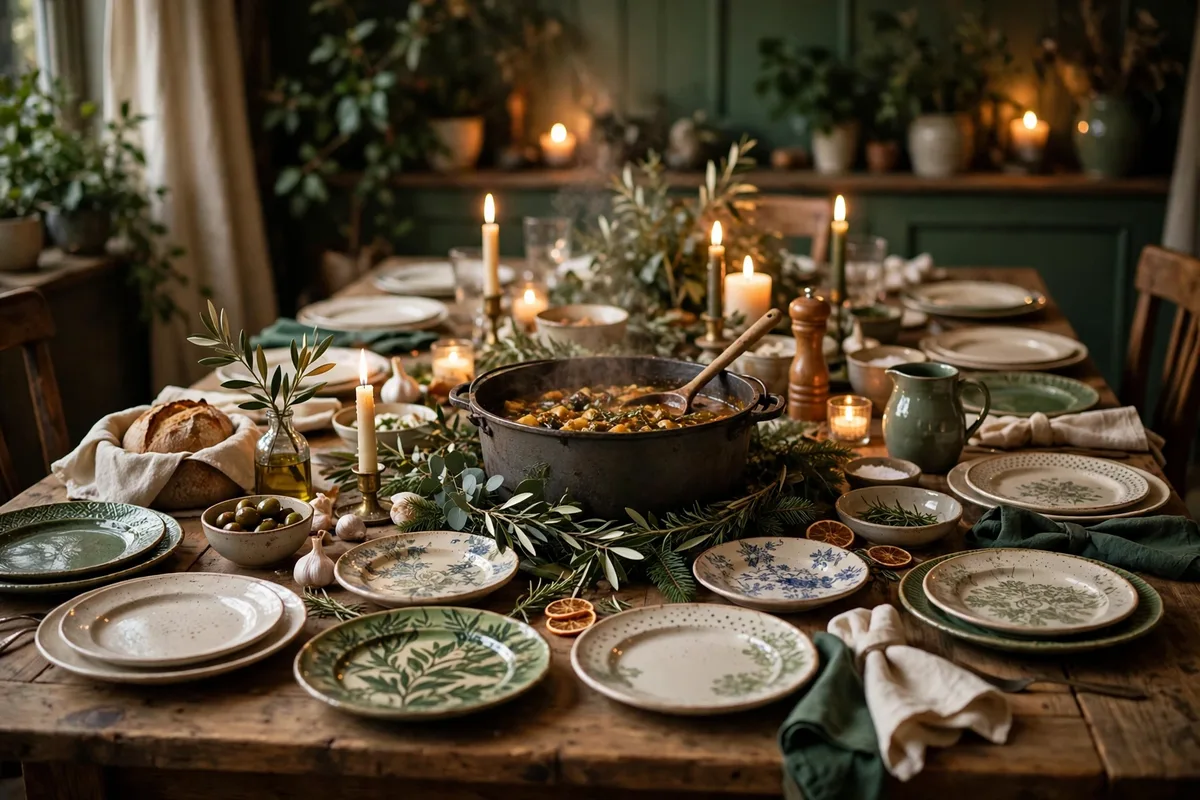
- The Sunday meal. Once a week, everyone cooks together, no exceptions, no excuses. The recipes are terrible and the meal is sacred.
- The spare room. There is always a spare bed made up for whoever needs it, and nobody has to explain why they are staying.
- The chore chart. They have a chore chart that nobody follows, and a silent system of doing each other's chores anyway that everyone follows perfectly.
- The group chat name. The group chat has been renamed forty times, and the current name is an inside joke from three years ago that nobody can explain anymore.
- The borrowed clothes. Clothes move between wardrobes so freely that nobody owns anything anymore, and everyone has given up keeping track.
- The holiday orphans. Every holiday, they host the people with nowhere else to go, and the table gets longer every year.
- The emergency contact. They all list each other as emergency contacts, and the hospital has stopped asking whether they are related.
- The birthday wall. Every birthday is written on the kitchen wall in marker, and nobody is allowed to paint over it, ever.
- The bad cook. One of them cannot cook at all, so their permanent job is washing up, and they are fiercely proud of being the best at it.
- The movie night veto. Movie night has a one-veto rule, and the same person uses their veto every single week on the same film.
- The nickname chain. Everyone has a nickname, and the nicknames have nicknames. New members get theirs within a week or they are not really in yet.
- The shared playlist. There is a playlist for cooking, a playlist for driving, and a playlist for bad days, and everyone knows which is which.
- The lookout. When one of them is in trouble, the others show up without being called, because someone always notices first and tells the rest.
- The photo drawer. There is a drawer full of printed photos, ticket stubs and notes, and nobody is allowed to tidy it.
- The house rules. The house has three rules, written on the fridge: no one eats alone, no one leaves angry, and the last slice is decided by a vote.
- The care packages. When one of them is away, the rest send a care package full of snacks and nonsense, every single time, without fail.
- The morning coffee order. One person makes coffee for the whole house every morning and knows every order by heart, including the ones people deny having.
- The shared language. They have words and phrases that mean nothing to outsiders, built up over years of shared jokes and shared disasters.
- The apology food. After a fight, the apology is always food, left outside a door with no note, and it is always accepted.
- The first aid kit. One of them keeps a first aid kit everywhere they go, because the group has a long history of small, stupid injuries.
- The bedtime stories. The oldest member tells the same three stories at every gathering, and everyone groans and listens anyway.
- The welcome home. Whoever comes home last is greeted at the door, even if it is three in the morning, because coming home alone is not allowed.
- The shared money jar. There is a jar for shared expenses that everyone pays into and nobody counts, and somehow it always has enough.
- The quiet member. The quietest one says the least and notices the most, and when they do speak, the whole room goes silent to listen.
- The family photo. Once a year they take a photo together, and every year someone is making a face, someone is half out of frame, and it is the best photo they own.
How do I build a found family that feels real?
Give the group at least one ritual, one rule, and one shared wound. The ritual is what they do together — the Sunday meal, the movie night, the family photo. The rule is what holds them together — no one eats alone, no one leaves angry. And the wound is what made them need each other in the first place: the reason each of them had nowhere else to go, or the event that threw them together. The ritual and the rule are the family you see; the wound is the family you feel.
Then let the family grow the way real ones do: slowly, and by addition. A new member should not slot in neatly. Give them a nickname that takes a week to earn, a chore they are terrible at, a place at the table that was not there before. The moment the group rearranges itself around a new person without being asked is the moment the reader believes it is a family.
Build the family pair by pair, too. A group is made of two-person bonds, and each one can be different — the cook and the bad cook, the quiet one and the storyteller, the lookout and the one who always needs looking out for. The Relationship Headcanon Generator can give you a starting idea for any two members of the group; build the rest of the family around what those two share. The friend group dynamics list will help you give each member a role inside the household.