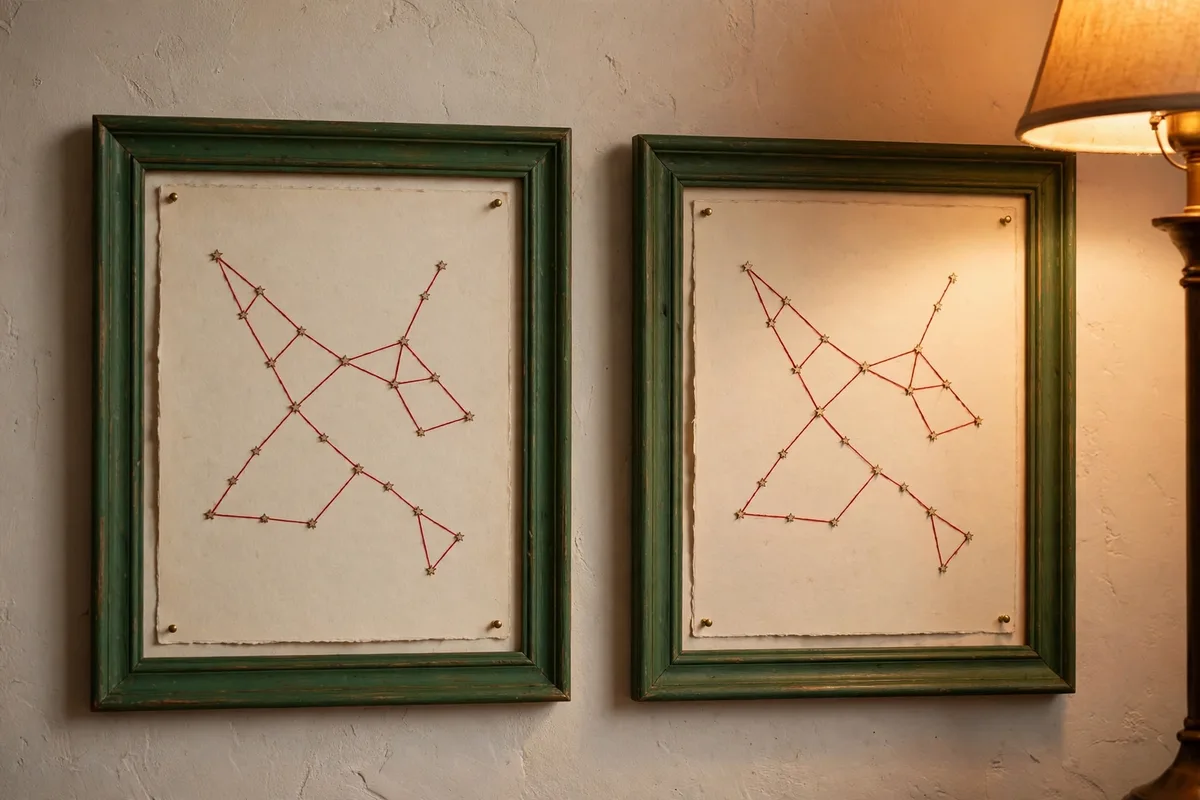
Soulmate AUs run on a single question: if fate tells you who you belong with, what do you do about it? Some characters accept it, some fight it, some never find out — and some find out their soulmate is the last person they expected. The mechanism is the hook, but the story is always about choice.
What is a soulmate AU?
A soulmate AU is an alternate universe where fate marks soulmates. The mark can take many forms: a name that appears on the wrist at eighteen, a red string visible only to the two people it ties together, the first words your soulmate will say to you tattooed on your skin, a timer counting down to the meeting, a world that is grey until the soulmate appears, or a shared sense — pain, dreams, a song only the two of them can hear. The mechanism tells the reader how fate works in this world. The story tells the reader what the characters do about it.
Soulmate AUs sit at middle distance on the canon scale: the world gains one new rule — fate is visible — and everything else stays. That single rule is enough, because it changes every relationship in the story. A character who knows their soulmate's name behaves differently from one who does not; a character whose timer stopped years ago carries a different grief from one whose timer is still counting.
Six mechanisms, six different problems
The mechanism you pick decides the problem. Choose the problem first, and the mechanism follows.
| Mechanism | How fate shows itself | The problem it creates |
|---|---|---|
| The name | Your soulmate's name appears on your wrist. | The name belongs to the wrong person — or the wrist is blank. |
| The red string | A string ties soulmates together, visible only to them. | Someone can see everyone's string but their own. |
| The first words | The first words your soulmate says are tattooed on your skin. | You have heard the words a hundred times and never recognised them. |
| The timer | A timer counts down to the meeting. | The timer stops — or hits zero in the middle of an argument. |
| The colour | The world is grey until you meet your soulmate. | Colour appeared exactly once, and never again. |
| The shared sense | Soulmates feel each other's pain, dreams or emotions. | You have been feeling a stranger's fear every night. |
Take the timer: a character whose timer stopped years ago is living with a different story from one whose timer is counting down. The stopped timer is a grief, a mystery and a question all at once — did fate give up, or did something go wrong? That question is the story.
25 soulmate AU ideas
- The name on the wrist. Your soulmate's name appears on your wrist at eighteen. One character's wrist is blank.
- The red string. A red string ties soulmates together, visible only to them. One character can see everyone's string but their own.
- The first words. The first words your soulmate says to you are tattooed on your skin. One character has heard theirs a hundred times and never recognised them.
- The timer. A timer on your wrist counts down to the moment you meet your soulmate. One character's timer stopped years ago.
- The shared pain. Soulmates feel each other's pain. One character has been feeling a stranger's pain for years.
- The colour. The world is grey until you meet your soulmate. One character has seen colour exactly once — and never again.
- The dream. Soulmates share dreams. Two strangers have been dreaming each other's lives for a decade.
- The song. Your soulmate is the only person who can hear the song in your head. One character has been humming it alone for years.
- The mark. Matching marks appear on soulmates. One character's mark matches someone they hate.
- The sense. Soulmates can sense each other's emotions. One character has been feeling a stranger's fear every night at the same hour.
- The voice. You hear your soulmate's voice in your head when they are in danger. One character hears a voice they have never met.
- The letter. Soulmates receive a letter from each other on their eighteenth birthday. One letter never arrives.
- The touch. The first touch between soulmates leaves a permanent mark. One character has a mark and no idea who gave it to them.
- The choice. In this world, you can reject your soulmate — once, and forever. One character is about to use their rejection.
- The wrong person. The mark says one name. The heart says another. The story is about which one wins.
- The second soulmate. Soulmates are supposed to be one. One character has two marks — and two people who claim them.
- The dead soulmate. Your soulmate died before you met. The mark is still there, and so is the grief.
- The enemy. Your soulmate is your enemy. The universe has a sense of humour, and neither of them is laughing.
- The distance. Soulmates can feel how far apart they are. One character has been walking toward a feeling for years.
- The swap. A clerical error in fate: two people have each other's soulmate marks. The paperwork to fix it takes a lifetime.
- The silence. Soulmates share a mental link. One character's link has been silent for a decade — and then it speaks.
- The colour of their eyes. You see the world in the colour of your soulmate's eyes. One character's world is a colour they have never seen on anyone.
- The birthday. Soulmates share a birthday. Two strangers born on the same day, at the same minute, keep meeting by accident.
- The name you can't say. Saying your soulmate's name aloud binds you to them. One character has been avoiding a name for years.
- The one who doesn't believe. One character doesn't believe in soulmates at all. Their mark says otherwise — and the other one knows it.
What makes a soulmate AU work
The mechanism should create a problem, not solve one. If fate hands the characters a perfect match, there is no story. The story starts when fate is inconvenient — the wrong person, the missing mark, the timer that stopped, the enemy on the other end of the string. Fate is the premise; choice is the plot.
For scene prompts built on these ideas, see the soulmate AU prompts, or roll a new world with the AU Generator. And if your characters need a detail that fate cannot explain — a habit, a fear, a secret of their own — the Headcanon Generator builds one in a click.