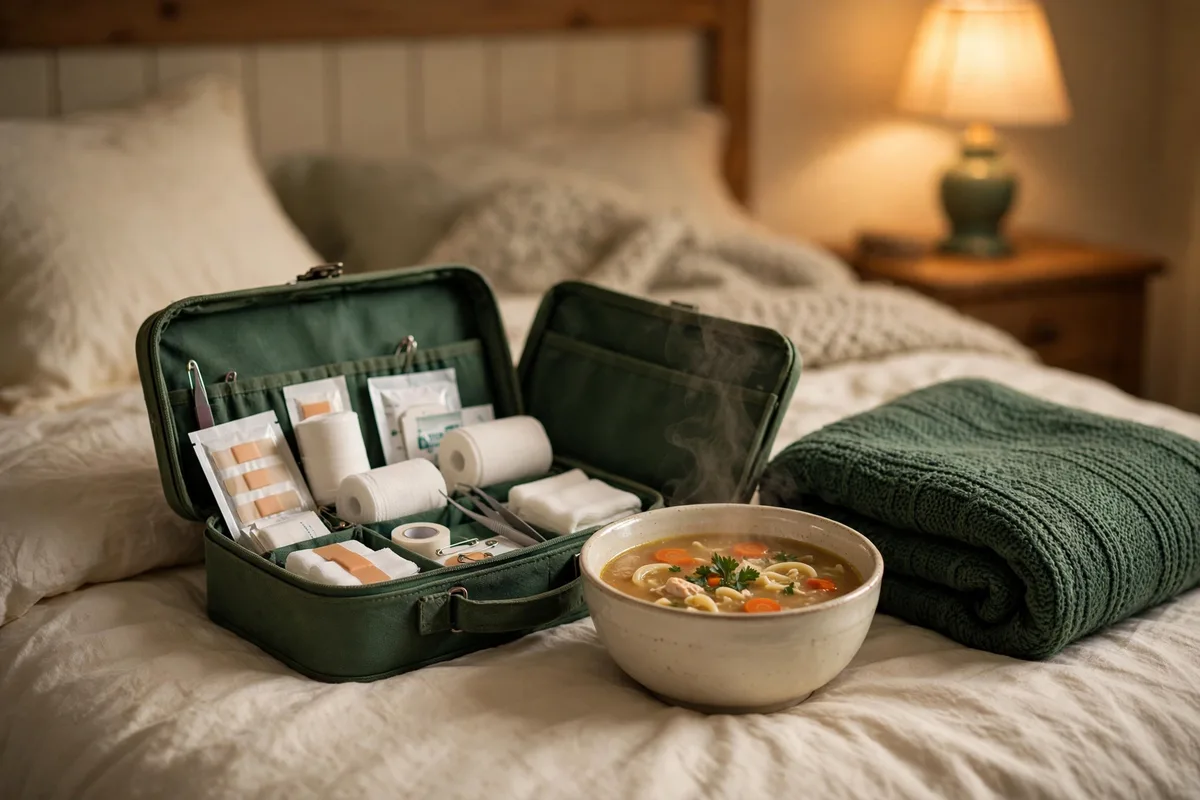
Hurt/comfort is a simple shape with endless variations: someone is hurt, someone else looks after them. The hurt can be a wound, a bad day, a loss, or a fear — and the comfort can be a bandage, a blanket, a meal, or just someone staying. The story is in the care: who shows up, how they help, and what it costs them to be there.
These prompts cover the full range, from battlefield injuries to quiet bad days. Use them as-is or adapt them to your characters.
What is hurt/comfort?
Hurt/comfort is a fanfiction trope built on two beats: one character is hurt, and another character comforts them. The hurt can be physical — a sprained ankle, a fever, a broken rib — or emotional: grief, rejection, exhaustion, fear. The comfort can be practical, like soup and stitches, or quiet, like sitting in a dark room together. The trope works because care is specific: the way someone looks after another person reveals more about both of them than any confession could.
It is the wider family that angst to comfort belongs to. Hurt/comfort covers any hurt and any comfort, including a single scene with no larger arc. Angst to comfort is the version with an emotional journey: the hurt is carried alone for a long time, and the comfort is the first time the character lets someone in. If your scene is one bad day and a hand reaching out, it is hurt/comfort; if it is the end of a long loneliness, it is angst to comfort.
Matching the comfort to the hurt
The comfort should fit both the hurt and the comforter. A practical character brings soup and a schedule; a quiet one sits in silence; a funny one tells a terrible joke at exactly the wrong moment. The wrong comfort, given with love, is often the most interesting version — because it shows the comforter trying.
| The hurt | Comfort that fits | Why it works |
|---|---|---|
| A wound or injury | Hands-on care: bandages, stitches, carrying them home. | Care is visible, physical and undeniable. |
| A fever or illness | Soup, a cold cloth, staying up through the night. | The comforter chooses to be there when there is nothing to do. |
| Grief or bad news | No words: cooking, cleaning, handling what the other cannot. | Words would fail; practical help does not have to. |
| Fear or panic | A calm voice, counted breaths, a quiet room. | Steadiness is the comfort — the comforter does not panic too. |
| Exhaustion | Guarding the door, turning off the lights, insisting on rest. | The hurt character cannot rest alone; someone has to allow it. |
Take the fever as an example: B is burning up and refusing to rest, and A brings soup, a cold cloth, and a stubbornness that matches B's. The comfort is not the soup — it is the refusal to leave. The reader remembers the staying, not the meal.
25 hurt comfort prompts
- The sprained ankle. B twists an ankle on a mission. A carries them the last mile, complaining the whole way, and never once puts them down.
- The fever. B is burning up and refusing to rest. A brings soup, a cold cloth, and a stubbornness that matches B's.
- The panic attack. B's breathing is out of control. A talks them through it — slowly, calmly, counting breaths out loud.
- The broken rib. A is hurt and hiding it. B notices the flinch, and the argument about resting starts immediately.
- The bad news. B gets the call. A doesn't ask what happened — they just sit down next to B and wait.
- The nightmare. B wakes up screaming. A is there before B is fully awake, talking about nothing until the shaking stops.
- The stitches. A stitches B's wound with shaking hands. B watches A's face the whole time, not the needle.
- The migraine. B can't stand light or sound. A turns the house dark and quiet, and sits in the dark with them.
- The grief. B lost someone. A doesn't offer words — they cook, they clean, they handle the things B can't.
- The training injury. B pushed too hard and paid for it. A helps them stretch, ice the injury, and admit they overdid it.
- The cold. B is freezing and too proud to say so. A gives them their coat without a word.
- The burn. A burns their hand cooking. B runs cold water, finds the cream, and bandages it with exaggerated care.
- The anxiety before the big day. B is terrified of tomorrow. A stays up late, talking through every fear until they shrink.
- The fall. B falls — literally, in front of everyone. A is the first one there, and the only one who doesn't laugh.
- The old wound. An old injury flares up in the rain. A knows the signs now, and has the medicine ready before B asks.
- The exhaustion. B hasn't slept in days. A makes them lie down, turns off the lights, and guards the door.
- The rejection. B was turned down, passed over, left behind. A takes them out for the worst food and the best conversation.
- The apology after the fight. The fight was bad. A comes back with bandages — literal and otherwise — and asks if they can fix it.
- The quiet room. The world is too loud for B today. A finds a quiet room, closes the door, and sits with them in silence.
- The medication. B forgot their medication. A remembers, and has already gone to get it.
- The scar. B is ashamed of a scar. A traces it gently and asks for the story — then listens to the whole thing.
- The rain. B is soaked and shaking. A wraps them in every blanket in the house and makes tea with too much sugar.
- The hospital wait. They're waiting for news. A holds B's hand in the corridor, and neither of them lets go.
- The first night alone. B is afraid of the dark, or the quiet, or being alone. A stays — on the floor, in the chair, wherever fits.
- The recovery. B is finally getting better. A has been there the whole time, and B finally says thank you — properly, this time.
Writing hurt/comfort well
The comfort should be specific to the characters. A practical character brings soup and a schedule; a quiet one sits in silence; a funny one tells a terrible joke at exactly the wrong moment. Let the comforter comfort the way they would — not the way a guidebook says they should.
And let the hurt character resist, a little. Nobody accepts care gracefully the first time. The resistance is what makes the acceptance mean something. For the same shape with a fuller arc, try the angst to comfort prompts, or give the hurt character a reason the comfort matters so much with the Headcanon Generator — a fear or a habit that explains why being looked after is so hard for them.